Beyond the Patch: A 2026 Framework for Repairing or Replacing Roofs, Windows and Render
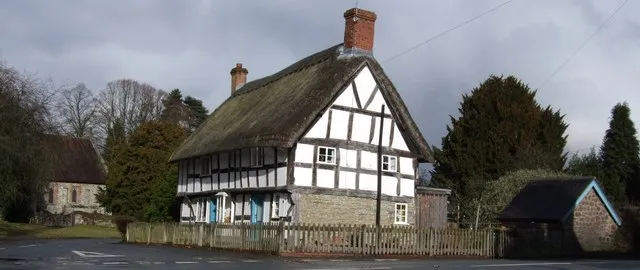
Photo: William Pugh, CC BY-SA 2.0, via Wikimedia Commons
Roofs, windows and render are the parts of a house that take the weather. When one fails, the immediate question is usually whether to patch it or renew it. The answer is rarely found in a single quote. A repair that restores performance for another decade can be excellent value; a repair that merely postpones failure can be a false economy. The difference lies in the condition of the whole assembly, the cause of the defect and the performance the homeowner expects.
Start with the defect, not the component
A crack in render is not a render problem until the cause is known. A leak is not a roof problem until the entry point is traced. Movement, moisture, failed flashings, blocked gutters, condensation and poor original detailing can all present as surface faults. Homeowners should commission a diagnostic inspection before accepting a repair or replacement quote. For roofs, that may mean a careful external and internal inspection, including roof space access; for windows, an inspection of frames, sills, sealed units and ironmongery; for render, an assessment of adhesion, moisture and the substrate.
Roofs: when local repairs stop being economical
Local roof repairs are appropriate when the defect is isolated: a slipped tile, a failed flashing, a cracked slate, a blocked valley or a damaged gutter. Replacing individual tiles and maintaining rainwater goods can extend the life of a roof considerably. The calculation changes when defects are widespread. Nail fatigue, brittle battens, failed underlay, multiple leaks and previous patch repairs are signs that the roof covering is nearing the end of its serviceable life. At that point, repeated repairs become a series of small losses.
As a broad guide, natural slate may last 75 to 100 years, clay tiles 50 to 70 years, concrete tiles 30 to 50 years and modern underlays 20 to 30 years, though exposure and detailing vary. If a roof is already beyond its expected life and more than a fifth of the covering is defective, replacement may be the more rational course. The same applies where insulation and ventilation need upgrading: a new roof provides the opportunity to correct both.
Windows: repair, refurbish or replace
Timber sash windows in period properties are often better repaired than replaced. A specialist can overhaul cords, pulleys, beads and sills, draught-proof the box frame and reinstate slim double glazing where appropriate. This preserves the building's character and can deliver useful energy improvements without the disruption of full replacement. Replacement is more defensible where frames are extensively rotten, sealed units have failed throughout, security is poor or the existing windows are inappropriate modern units that cannot be economically improved.
For uPVC windows, repair is usually limited to hinges, handles, gaskets and sealed units. Once frames have distorted or discoloured and the units are failing, replacement becomes more likely. Homeowners should compare U-values, frame material, glazing specification, ventilation and installation quality, not just the headline price. Replacement windows in England and Wales are subject to building regulations on thermal performance, and in conservation areas or listed buildings consent may be required.
Render: breathability and the cement trap
Render decisions often turn on moisture. Cement-based render on a solid-walled period property can trap moisture and cause damp, timber decay and frost damage. In those cases, patching cracks without addressing the render system may be pointless. A breathable lime render or a suitable alternative may be the correct repair, but only after the cause of damp has been established. Conversely, a modern rendered cavity wall with isolated cracking may be repairable by cutting out and remaking the defective area.
Replacement is more likely where render has debonded over a large area, where the substrate is unstable, or where the existing system is incompatible with the wall construction. Homeowners should ask for adhesion testing, moisture readings and a specification that states the render mix, preparation and movement joints.
A lifecycle comparison
A practical comparison should weigh capital cost, remaining life, performance and disruption. The following evidence framework can help.
| Question | Points towards repair | Points towards replacement |
|---|---|---|
| Extent of defect | Isolated and traceable | Widespread or recurring |
| Age and expected life | Within service life | At or beyond service life |
| Cause | Local damage or maintenance | Systemic failure or poor original design |
| Performance | Meets current needs | Poor thermal, weather or security performance |
| Heritage context | Original fabric can be retained | Existing element is inappropriate or beyond repair |
| Disruption | Low access and short works | Scaffolding and extensive works unavoidable |
This is not a scoring system. It is a way to test whether a low repair quote is addressing the cause or merely the symptom.
Evidence to gather before committing
Before authorising either repair or replacement, homeowners should obtain a written diagnosis, photographs, moisture or thermal readings where relevant, and at least two like-for-like quotes. For roofs, ask for access arrangements, scaffolding, underlay and ventilation details. For windows, ask for U-values, glazing specification, guarantees and confirmation of building regulations. For render, ask for the system specification, adhesion test results and details of how the wall will manage moisture. In conservation areas or listed buildings, check consent requirements before work starts.
Period property and local exposure
The Three Counties include many older properties, from Cotswold stone cottages to timber-framed buildings in Herefordshire and Victorian terraces in Worcestershire. These buildings often perform differently from modern construction. They may rely on breathability, have irregular structures and sit in exposed locations. Local weather, including driving rain and frost, accelerates deterioration of external elements. A decision that would be reasonable on a modern estate may be inappropriate on a period property.
Conclusion
Repair and replacement are not moral choices. They are lifecycle decisions. The right answer is the one that addresses the cause, restores performance and offers the best value over the remaining life of the building. Homeowners who gather evidence before committing, and who compare quotes on the same specification, are better placed to avoid both unnecessary replacement and repeated repair.