Brick, Render, Timber and Slate: Choosing Materials That Weather Well in the Three Counties
Photo: Kev Griffin, CC BY-SA 2.0, via Wikimedia Commons
Material choice is often discussed in terms of appearance, cost or speed of construction. All three matter, but for homeowners in the Three Counties there is a fourth consideration that deserves equal weight: how a material will behave over the next twenty or thirty years. The local climate brings damp winters, driving rain on exposed elevations, occasional hard frosts and enough summer heat to test sealants and paints. Buildings that look well on completion can age very differently when those conditions are applied year after year.
The right choice is rarely the cheapest or the most fashionable. It is the material that suits the building, the exposure of the site and the maintenance regime the owner is prepared to follow. A material that ages gracefully in one context can fail early in another.
The local climate is not one thing
The Three Counties contain sheltered valleys, exposed ridgelines, market towns and villages where older buildings sit close to the road. A south-west facing elevation may take the brunt of wind-driven rain, while a north-facing wall may stay damp for longer and be more prone to moss and algae. Two houses a few miles apart can present very different maintenance demands.
This matters because materials do not fail in isolation. A render may crack because the substrate moves, a timber board may rot because water is trapped behind it, and a slate may slip because the fixing has corroded. Detailing and workmanship often matter as much as the material itself.
Brick: slow ageing, but not maintenance-free
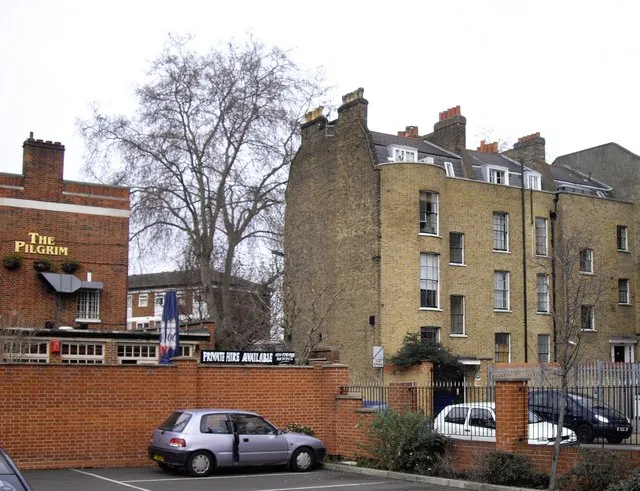
Brick is common across the Three Counties and is often the default choice for extensions because it can match existing walls. Good-quality brick is durable and can last for generations. It weathers by developing a patina rather than failing suddenly, although mortar joints are the more vulnerable element. Lime mortar in older buildings is softer and more breathable than cement mortar, and repointing with the wrong mix can accelerate erosion of the brick edges.
Brick is not maintenance-free. Mortar joints erode, particularly on exposed elevations, and defective pointing can allow water into the wall. Matching new brick to old is not simply a matter of colour; size, texture, bond and mortar must all be considered. A close match that is detailed poorly will still look like a repair rather than part of the original building.
Render: a smooth finish with exposed edges
Render can provide a clean, uniform finish and is often used on older properties as well as modern extensions. Its performance depends heavily on the substrate, the mix and the quality of the application. Cracks at corners, around openings and at junctions with other materials are common weak points. Once water gets behind render, it can be slow to escape, particularly in solid-wall construction.
In the Three Counties, render on exposed elevations should be detailed with care. Flexible sealants can accommodate minor movement, but they are not a substitute for proper crack repair. A painted render finish will need periodic decoration, and the choice of paint matters. Breathable finishes are usually preferable on older walls, while modern insulated render systems require their own specification and maintenance regime.
Timber cladding: appearance depends on specification
Timber cladding is often chosen for its warmth and visual character, but it is one of the more maintenance-sensitive options. Softwood cladding may need regular treatment or painting, while durable hardwoods and modified timbers can perform better but cost more. The critical issues are ventilation, fixing and water shedding. If boards are tight together, poorly drained or fixed with incompatible fixings, moisture can become trapped.
Timber can age gracefully if it is allowed to weather naturally and is detailed to dry out. It can also fail early if it is sealed incorrectly or neglected. Homeowners should be clear about the appearance they want and the upkeep they are prepared to accept. A natural weathered finish is not the same as neglect, but it does require periodic inspection.
Slate: long service life with correct detailing
Natural slate is a traditional roofing material in many parts of the Three Counties and is valued for its long service life and appearance. It is not indestructible. Slates can slip, crack or delaminate depending on their type and age, and flashings at junctions are often the first place to fail. The fixings, underlay and ventilation matter as much as the slate itself.
Slate is generally a low-maintenance covering when installed correctly, but repairs should be carried out by someone familiar with the material. Mixing new slates with old can be visually acceptable if the match is careful, but the wrong size or thickness can affect laying and weathertightness. For extensions, slate can help a new roof sit comfortably with an older building, provided the detailing is not simplified to cut cost.
Concrete tiles: dependable but heavier and variable
Concrete tiles are widely used, generally cost-effective and available in many profiles and colours. They can perform well for decades, but quality varies. Some tiles are more absorbent than others, and moss growth can be a persistent issue on shaded or damp roofs. They are heavier than some alternatives, which may affect structural design in a renovation.
Concrete tiles are a practical choice where the appearance is acceptable and the roof structure suits their weight. They are not usually chosen to match a traditional slate roof closely, although interlocking profiles can imitate some styles. As with slate, flashings and ventilation are common failure points, so the covering should not be judged in isolation.
Composites: predictable, but check colour and fixing
Modern composite products, including cladding, decking and some roofing elements, are marketed on the basis of low maintenance. Their performance is generally more predictable than natural materials, but they are not uniform. Colour stability, thermal movement and fixing details vary between products, and some composites can fade or chalk over time. Good ventilation and correct fixing are still essential.
Composites can be useful where a consistent finish and reduced decoration are priorities. They may not be appropriate where the aim is to match an older building closely, because the texture and ageing pattern can look out of place. Homeowners should ask for sample panels that have been exposed to weather, not just new samples.
Matching new work to existing buildings
A common mistake is to choose a material that looks right on the day of completion but will age on a different cycle from the original building. A new cement render on an old stone cottage, a non-breathable paint on a traditionally built wall or a composite cladding on a brick elevation can all create a maintenance mismatch. The result is not always immediate failure, but it can mean repeated repairs and a patchwork appearance.
Where an extension meets an existing wall, junctions need particular attention. Water should be directed away, not trapped. Movement should be accommodated, not sealed rigidly. Materials should be allowed to dry in the way they were designed to dry.
A practical comparison framework
When comparing materials, ask four questions. First, how exposed is the elevation and how much driving rain will it receive? Second, how does the material dry and what happens if water gets behind it? Third, what maintenance does it need, and is that maintenance realistic for the owner? Fourth, how will it age next to the existing building?
A material that ages gracefully is not necessarily one that never changes. Brick, slate and timber all change with weather, but they do so in ways that can be accepted and managed. Materials that fail early often do so because the detailing, substrate or maintenance regime was wrong, not because the material itself was inherently unsuitable.
For homeowners planning an extension or repair, the most useful approach is to discuss exposure, detailing and maintenance openly with the builder and designer. The cheapest material on the schedule is rarely the cheapest over the life of the building. The better choice is the one that suits the building, the site and the owner's willingness to look after it.