The Material You Cannot See: Planning an Asbestos Survey Into a Three Counties Renovation
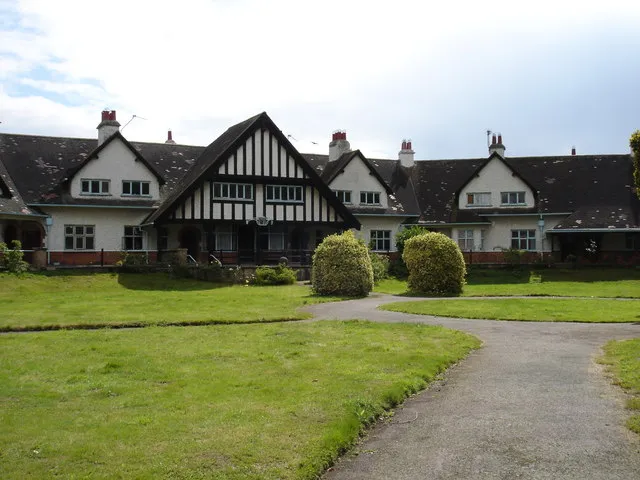
A renovation in an older Three Counties property rarely begins with a blank canvas. Behind plasterboard, beneath floor coverings and above ceiling linings, the fabric of the building may still contain materials installed decades ago. In Worcestershire, Herefordshire and Gloucestershire, the housing stock ranges from timber-framed cottages and Victorian terraces to post-war semis and 1980s executive homes. Any of these can hold asbestos-containing materials, and the safest professional default is not to hope for the best but to presume contamination until a survey demonstrates otherwise.
Why Presumption Is the Safer Default
Asbestos was not prohibited in the UK until 1999, so a property built or refurbished before 2000 should be treated as a possible source. The material was used in many forms: asbestos cement roof sheets and garage roofs, textured decorative coatings, floor tiles and adhesives, insulating board, pipe lagging, bath panels and boiler flues. Some are obvious to a trained eye; many are not. A homeowner cannot reliably identify asbestos by colour, texture or age, and the consequences of disturbing fibres are serious because related diseases can take decades to develop.
Presumption does not mean panic. It means that before any drilling, sanding, stripping or demolition takes place, the project team assumes suspect materials are asbestos-containing until sampling or a survey confirms their status. That single change in approach affects how a builder prices risk, how the programme is sequenced and how the homeowner budgets for removal and clearance.
Three Surveys, Three Different Jobs
The word survey is used loosely in domestic projects, but the three main types serve distinct purposes.
A management survey is the least intrusive. It locates asbestos-containing materials that are reasonably accessible and assesses their condition so they can be managed in place during normal occupation and maintenance. It is useful for a landlord or a homeowner planning minor work, but it is not designed to find everything hidden behind sealed linings or within floor voids. It should not be treated as clearance for a refurbishment.
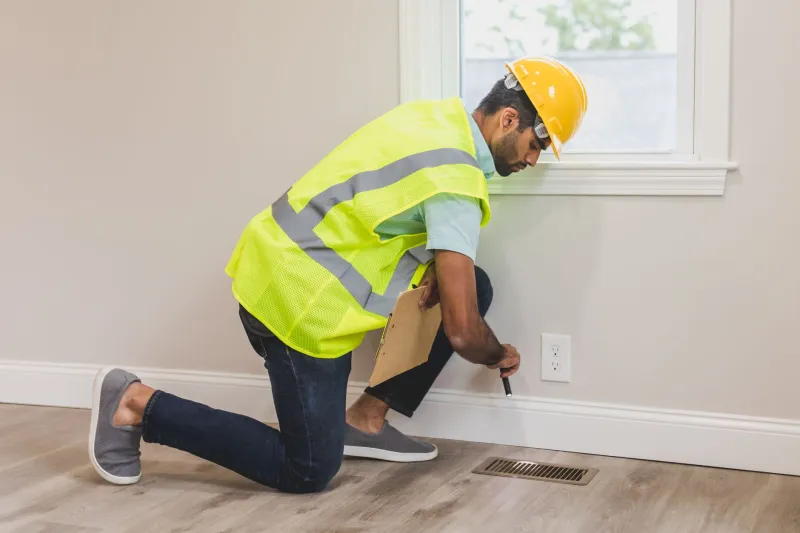
A refurbishment survey is intrusive and targeted at the areas to be altered. Before removing a wall, opening a ceiling or replacing a bathroom, the surveyor needs access to concealed spaces. The survey should be commissioned with clear drawings and a written scope of the proposed works. If the scope later changes, the survey may need to be revisited. A refurbishment survey is the document a competent builder will ask for before pricing demolition or strip-out.
A demolition survey is the most comprehensive. It is carried out before a building or structure is demolished and is intended to locate all asbestos-containing materials so they can be removed safely. It is not normally required for a straightforward extension, but it may be relevant where a garage, outbuilding or substantial structural section is being taken down.
Folding Findings Into Budget and Sequence
An asbestos survey is not a bureaucratic preliminary to be arranged after the builder has started. It belongs at the front of the project, before the final budget is fixed and before the programme is agreed. The findings can change both.
Removal costs vary widely. A few square metres of asbestos cement sheeting may be a modest item; insulating board, lagging or contaminated debris can run into thousands of pounds once enclosure, removal, clearance and waste documentation are included. A sensible budget carries a specific asbestos allowance rather than relying on a general contingency. The allowance should be informed by the survey, not by an online estimate.
The sequence matters just as much. The usual order is survey, review of findings, adjustment of scope, licensed removal where required, clearance and certification, and only then the main construction trades. Other work should not proceed in an area where suspect material is still present or where removal is underway. On an occupied renovation, that may mean decanting a room or isolating a zone for longer than the household expected. Planning that disruption early is easier than discovering it mid-build.
Records should be kept with the project file: the survey report, removal certificates, waste consignment notes and clearance documentation. These papers are useful at handover and may be requested by future buyers, contractors or building control.
When a Licensed Contractor Is Required
Not all asbestos work is licensable, but the higher-risk materials are tightly controlled. Work involving loose-fill insulation, sprayed coatings, pipe lagging and most asbestos insulating board is generally licensable and must be carried out by a contractor holding an HSE licence. Licensed work also carries notification requirements to the Health and Safety Executive before work begins, unless emergency arrangements apply.
Other materials, such as asbestos cement sheets, floor tiles and textured decorative coatings, are generally non-licensed. That does not make them a DIY task. Fibres can still be released, and the work requires controlled methods, suitable respiratory protection, cleaning and correct waste disposal. Some non-licensed work is notifiable. A homeowner should not interpret the absence of a licence requirement as permission to break up a garage roof with a hammer.
What a Homeowner Can Check Without Disturbing Anything
A homeowner can safely review old building plans, previous survey reports and maintenance records. A visual check from a distance is also reasonable: look at garage roofs, boiler cupboards, loft spaces and the backs of old cupboard panels, but do not touch, probe, scrape, sand or drill. Do not use a domestic vacuum near suspect material and do not move boards or debris. If a material is damaged or crumbling, keep people and pets away and seek advice rather than attempting a clean-up.
In the Three Counties, where older properties often sit alongside newer extensions, the asbestos question should be part of the pre-build conversation. It is not a sign of a difficult project. It is a sign that the project has been thought through before the first hammer falls.